
FA Sustainability Update Report
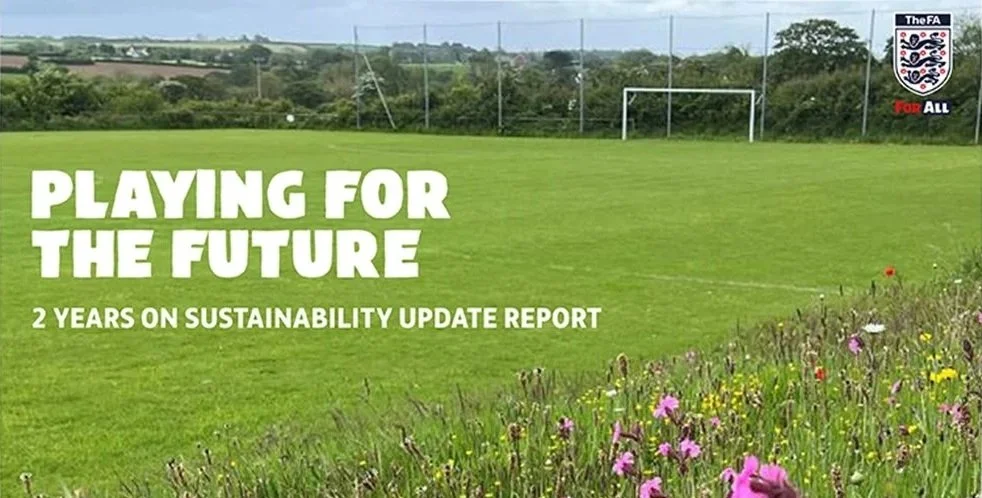
In 2023, the FA launched its five-year sustainability strategy, Playing for the Future. Now, two years in, it has shared a progress update that gives us a chance to see how the game is changing and what lies ahead. From cutting emissions at Wembley Stadium and St. George’s Park to rolling out climate risk assessments and building new grassroots partnerships, there’s plenty to be excited about.
As a signatory of the UNFCCC Sports for Climate Action Framework, the FA is targeting zero emissions across all operations by 2040. Since the 2018/19 baseline, the organisation has invested over £7 million in energy efficiency, cutting electricity consumption by 27% and gas usage by 36%. A key milestone in this journey is the opening of Three Lions Yard at St George’s Park, a new logistics compound, and the FA’s first building to run entirely on electricity.
Building on these efforts, after two years of collaboration, testing, and fine-tuning, the Wembley grounds team reached another milestone: recycling 100% of the iconic pitch. Karl Standley, Head of Grounds and Surface Transitions, said: “By ensuring old pitches don’t go to landfill, we can create a cycle that will ultimately reduce our impact on the environment and benefit community clubs across the country for years to come.” Indeed, by becoming the first venue in the world to fully recycle its hybrid pitch, Wembley is setting a new standard for sustainability in sport.
Waste management has also seen impressive progress. The FA now oversees an average recycling rate of 64% across events, with the recycling rate at UEFA Champions League Finals at Wembley Stadium jumping from 42% in 2013 to 70% in 2024. These improvements reflect ongoing efforts to reduce landfill waste and create more sustainable event operations.
From energy efficiency and zero-emission buildings to recycling innovations and greener events, progress is already visible on and off the pitch. While there’s still work to do to reach the 2040 goal, initiatives like Playing for the Future demonstrate that with investment and innovation, football can create a lasting positive impact for both the environment and communities across the country.