
FFF joins UCL for discussion of football, climate, and the 2026 World Cup
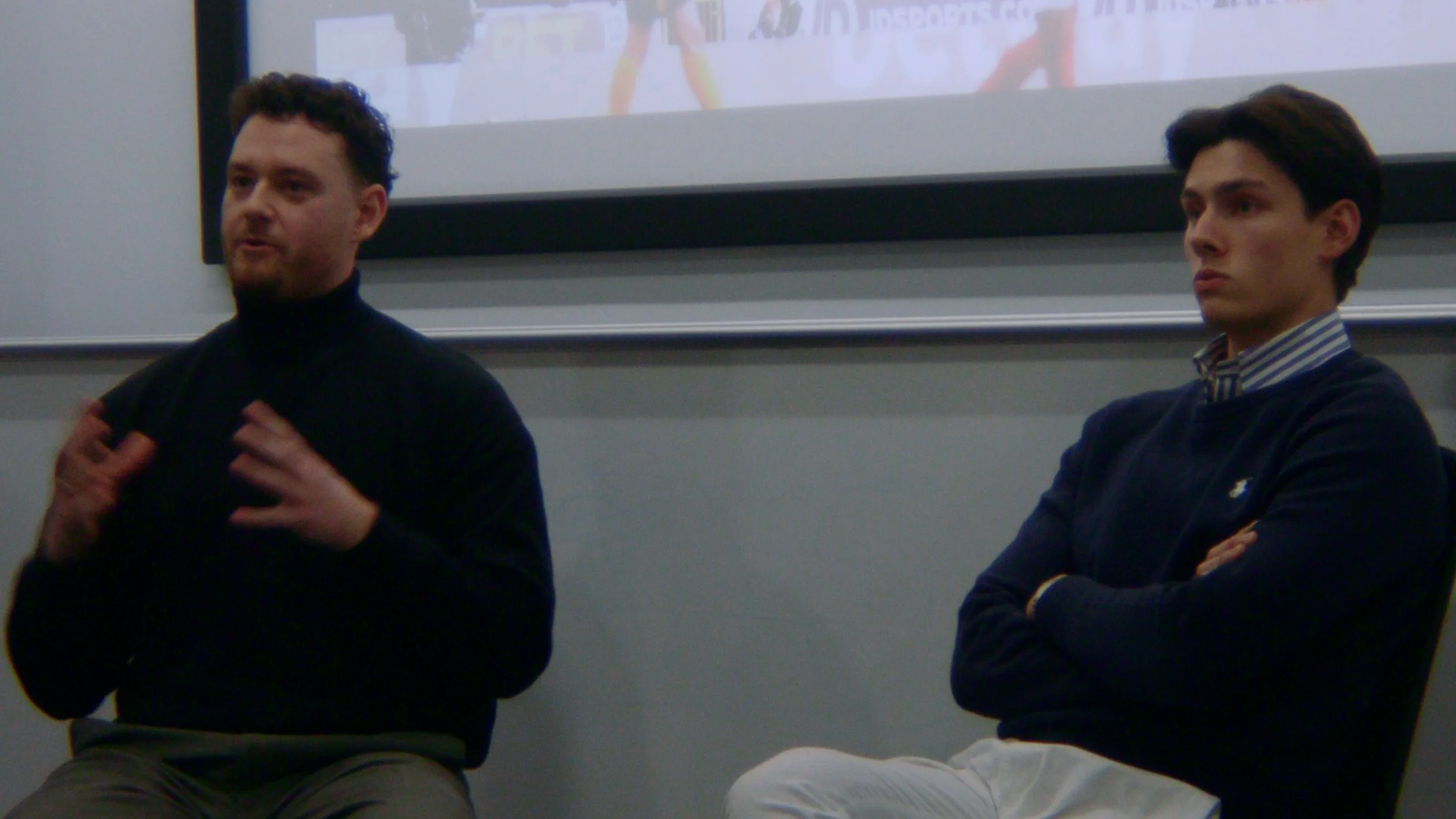
Thom Rawson (left) and Alexei Rojas (right) during the UCL talk.
Back in March, we were invited by University College London (UCL) for a conversation on the future of football in a warming world. UCL, ranked as one of the top universities in the world for both academic performance and sustainability, hosted this event as part of their ‘28 Days of Sustainability’ programme of events.
The event, “Pitches in Peril: What the 2026 World Cup Means for Football’s Climate Future,” brought together experts from team FFF and current player Alexei Rojas to explore a question that is no longer hypothetical: what happens to football when the climate crisis reshapes where, and whether, we can play?
Attendees heard from:
Dan Hall, Senior Sustainability Communications and Engagement Officer at UCL and Communications and Research Manager at Football For Future
Thom Rawson, Sustainability Lead for Wolverhampton Wanderers FC and Sustainability Manager at Football For Future
Gemma Thornley, Communications and Champions Officer at Football For Future
Alexéi Rojas Fedorushchenko, professional footballer for Arsenal FC
A World Cup under pressure
With the 2026 World Cup approaching - set to be the largest, most geographically dispersed tournament and possibly the most carbon-intensive sporting event in history - Dan introduced our work on our World Cup climate campaign. The talk introduced the 'Pitches in Peril' report, a groundbreaking global climate risk report for football, revealing how climate change is threatening the game from World Cup stadiums to community pitches.
This report, created by Football For Future and Common Goal in partnership with Jupiter Intelligence and supported by the CO₂ Foundation, offers unprecedented analysis of how rising heat, flooding, and drought will reshape the places we play.
With data spanning 16 World Cup 2026 stadiums, future venues for 2030 and 2034, and 18 grassroots pitches tied to football legends including Messi, Salah, and Pelé, the findings mark a turning point for football’s role in the climate crisis
From extreme heat in North America to flood risks in coastal cities, the message is clear: climate change is no longer a future threat to football - it is already altering the game.
Players, fans, clubs, and a growing call for action
The UCL event also highlighted the growing role of players as climate advocates. Voices from across the professional game, including those currently competing at the highest levels, are increasingly speaking out about the risks facing football and the responsibility to act. Gemma, who has worked on FFF projects such as football’s biggest ever player-led climate action campaign, talked about her experience with helping players to become environmental advocates.
One of those players is panellist Alexei, who shared his experience of becoming interested in sustainability to taking action to drive change in Arsenal’s academy.
Thom, who has worked on projects supporting elite clubs in making their operations more sustainable, shared his experiences of working with Premier League clubs.
Audience members enthusiastically put questions to the panel, asking the speakers about their thoughts on the intersection of climate with football at both grassroots and elite level, and what action can be taken.
The role of Football For Future
For Football For Future, this moment is about more than raising awareness - it’s about mobilising the entire football ecosystem.
From working with players and clubs to producing research like Pitches in Peril, the organisation is helping to reframe football not just as a victim of climate change, but as a driver of solutions.
Because ultimately, safeguarding football means safeguarding the environments in which it’s played.
A big thanks to UCL for having us, and for all the attendees for a great discussion. We’re always happy to visit universities and other organisations to share our work and discuss anything football and climate - just get in touch via info@footballforfuture.org.