

WORLD CUP 2026
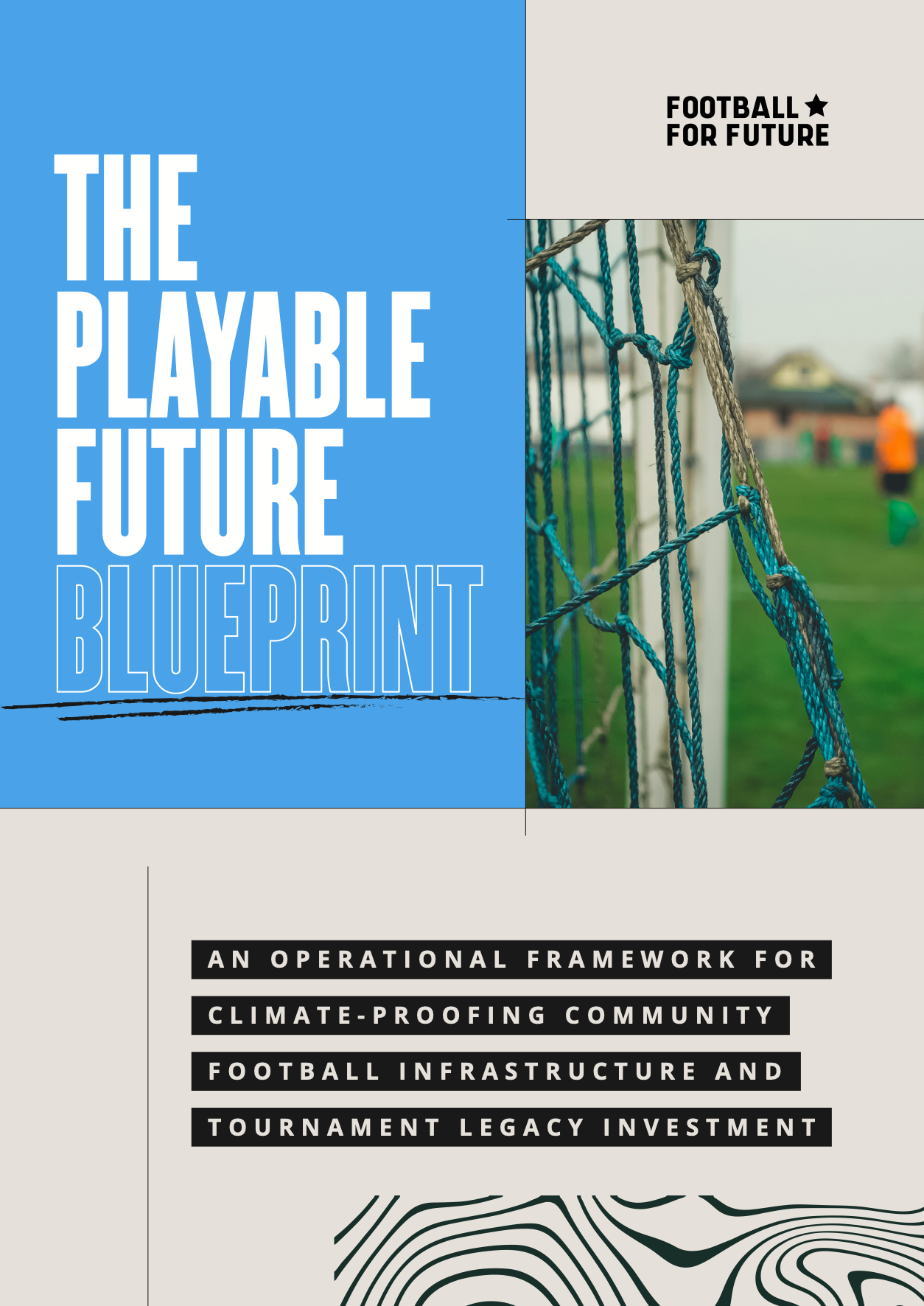
the playable future blueprint
The Playable Future Blueprint is Football For Future's operational framework for climate-proofing community football infrastructure and tournament legacy investment, giving football's organising bodies a repeatable, end-to-end model to integrate climate-risk safeguards across the lifecycle of grassroots football developments.
The Blueprint sets out:
3 Funding Tracks - New Developments, Facility Upgrades, Resilience Fund
6 Lifecycle Phases - Fund, Design, Source, Empower, Measure, Share
The Playable Future Model, applying the phases across the tracks for governing bodies, tournament organisers and national associations

Will this World Cup be the world’s most-watched climate change event?
We already know what major tournament climate disruption will look like. But when extreme weather affects football, climate change is not always recognised as the root cause. Football For Future calls this the ‘football-climate perception gap’.
This World Cup may make climate disruption visible at a global scale. So let’s use this as an opportunity to start a serious conversation about the new climate realities we are facing, and the future we want to build.
Climate change is already changing football - this is climate adaptation in action. But football needs to do more to adapt to our new climate reality, especially at grassroots level.
Football For Future’s message is simple: “Climate resilience should be embedded into the legacy of major football tournaments, to protect the future of football from climate extremes.”
Over the last year, we’ve been working to better understand how climate risks impact football, and how climate resilience can be practically applied across different levels of the game.
As the World Cup kicks off, we’ll be responding to World Cup moments to help people join the dots between the impacts of extreme weather on the game, and climate change itself, and working to secure climate resilience within the legacy of future major football tournaments.
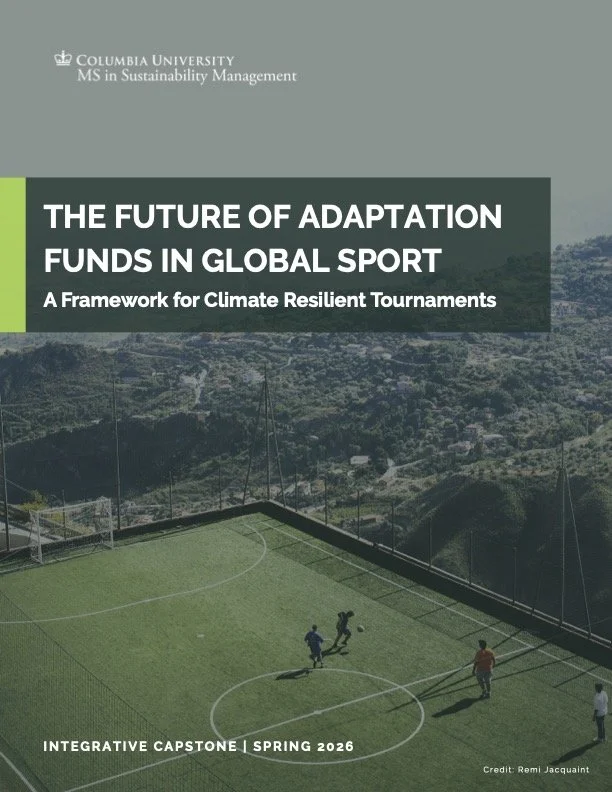
The Future of Adaptation Funds in Global Sport
In partnership with the Columbia Climate School, Football For Future commissioned a research framework exploring how global football tournaments can channel climate adaptation funding to grassroots communities on the frontlines of climate change.
The report proposes a seven-pillar framework for tournament organisers to:
Establish and govern a dedicated climate resilience fund
Define eligible impact areas based on localised climate risk
Distribute funding equitably across host cities
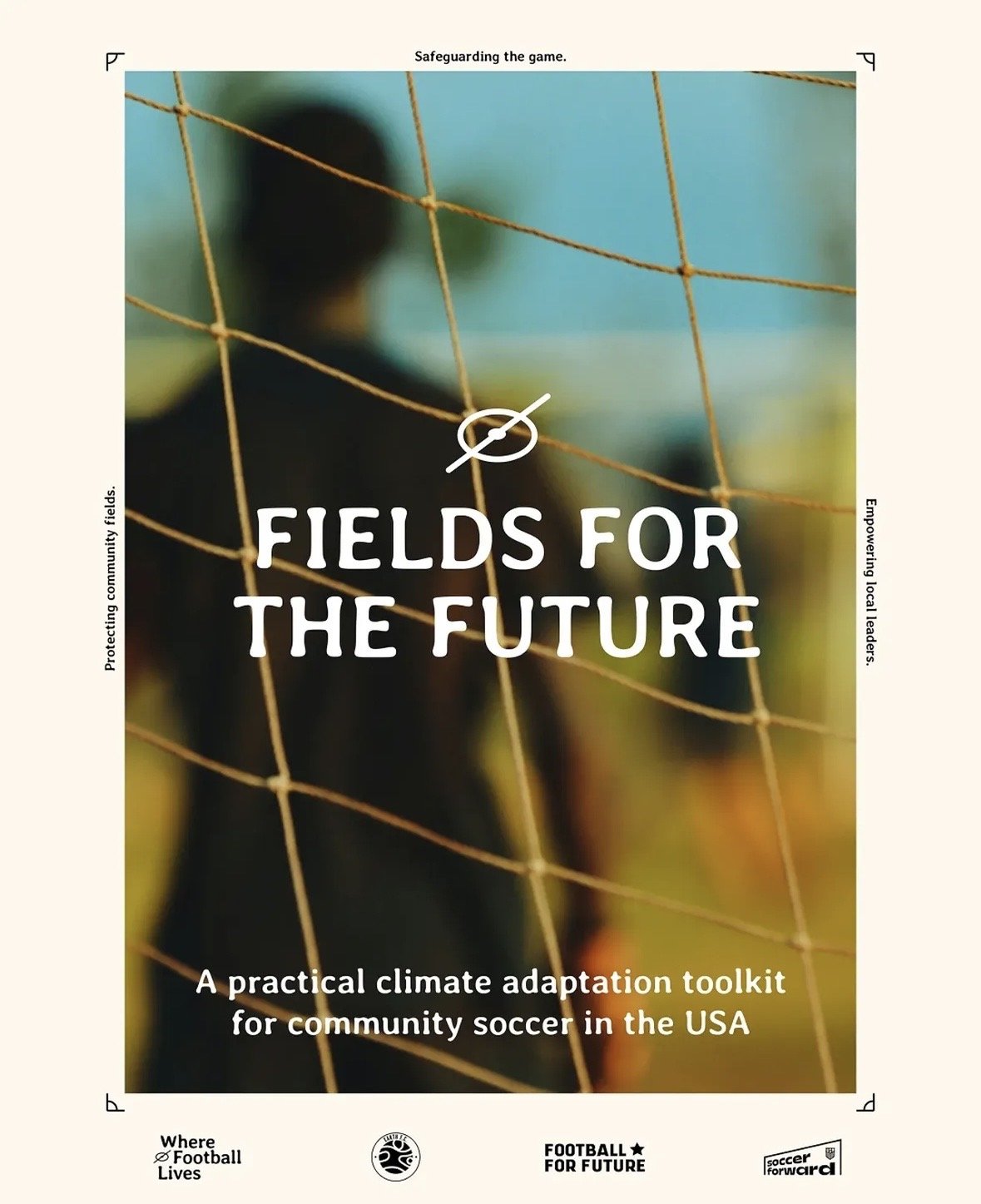
FIELDS FOR THE FUTURE
As part of our World Cup climate adaptation campaign we created a practical toolkit for community soccer in the USA.
This toolkit supports community soccer organisations to:
Understand how climate affects community soccer
Identify local climate hazards
Assess vulnerability and take action

⚽ 2026 World Cup Climate Risk Campaign
We’ve launched a landmark project positioning football at the centre of global climate action.
Led the first IPCC-aligned climate risk study into World Cup host stadiums and grassroots pitches worldwide
Driving the largest-ever public activation of professional men’s players for climate action
Produced record-breaking fan insights on sustainability attitudes
Designed to catalyse action across the football ecosystem ahead of the world’s biggest sporting event